
US clean energy investment accelerates despite policy curbs
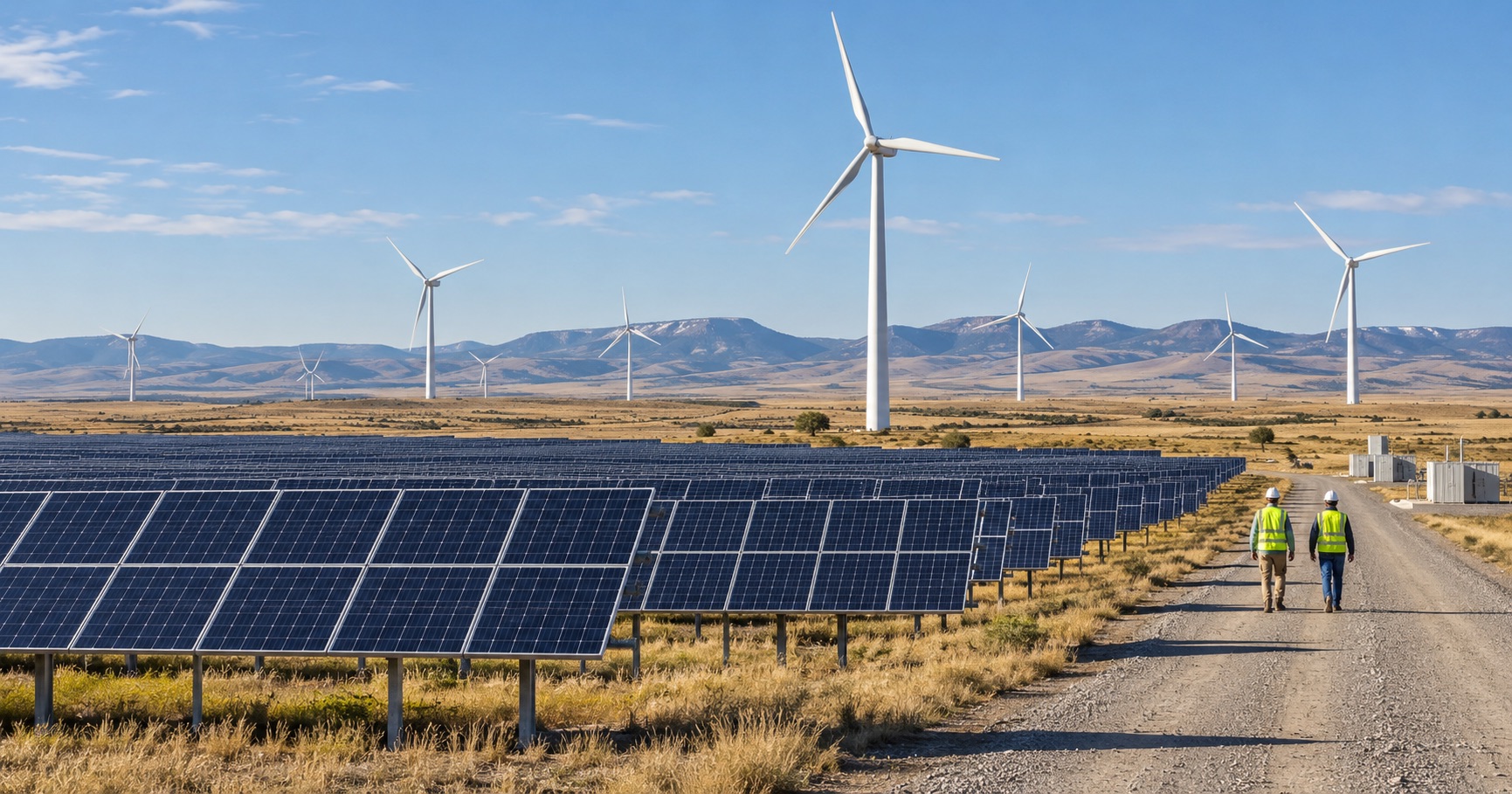
US renewable-energy development is accelerating even as the Trump administration moves to reduce federal support for solar and wind, with new clean-energy additions expected to reach a record 45GW this year.
S&P Global Energy estimates the increase will be about 25 per cent above the previous record set in 2024. The growth is being driven by rising electricity demand, a rush to secure expiring tax incentives and higher energy prices linked to the war in Iran.
For investors and developers, the figures point to a market where demand for new generation is continuing to support project activity despite a more difficult policy environment.
Power demand strengthens the project pipeline
S&P expects new US solar capacity to rise by nearly one-third in 2026, while wind additions are forecast to increase by almost 50 per cent. Solar is expected to set another record in 2027, although wind additions are forecast to ease before recovering.
The demand outlook is a major factor. Consultancy ICF expects US electricity consumption to increase 39 per cent by 2035, driven by data centres and the electrification of household appliances and transport.
Development timelines also favour renewables in some cases. RMI estimates that new solar and wind projects can have lead times of less than two years, compared with at least three years for gas projects.
Lazard estimates that producers can break even at about US$38 per megawatt hour for solar and US$37/MWh for wind, compared with at least US$48/MWh for gas. The figures do not fully account for grid upgrades or batteries needed to manage intermittent generation.
Policy restrictions have not stopped construction
The expansion is occurring alongside significant federal policy changes. The One Big Beautiful Bill Act reduced tax credits for solar and wind, while the administration has also intervened in project approvals, including more than 150 onshore wind projects, according to the report.
The administration also broke up the proposed Esmeralda 7 project in Nevada, which would have been the largest single solar project in the United States.
However, the legislation gave solar and wind developers until July 4 to begin work on projects and until 2030 to complete them. S&P Global renewables analyst John Murray said the deadline encouraged developers to accelerate construction starts.
Court decisions have also limited some federal actions. A district court judge in Oregon recently ordered the Pentagon to stop blocking onshore wind development, while courts have blocked five administration attempts to halt construction at offshore wind projects on the US east coast.
The White House has defended its energy policy, with spokeswoman Taylor Rogers highlighting record-high oil and gas production and saying the administration had ended subsidies it regarded as costly and unreliable.
Consumer spending is adding another source of momentum. Rhodium Group reported that residential solar panels, batteries and zero-emission vehicles led clean-energy spending in the second quarter of 2026, with expenditure up 45 per cent from the previous quarter and 21 per cent from the same period in 2025.
The combination of electricity-demand growth, competitive project economics and construction deadlines is keeping investment flowing into US clean-energy projects even as the policy landscape becomes less supportive.
SOURCE ATTRIBUTION:
Based on reporting by Financial Times, published 21 August 2026.