
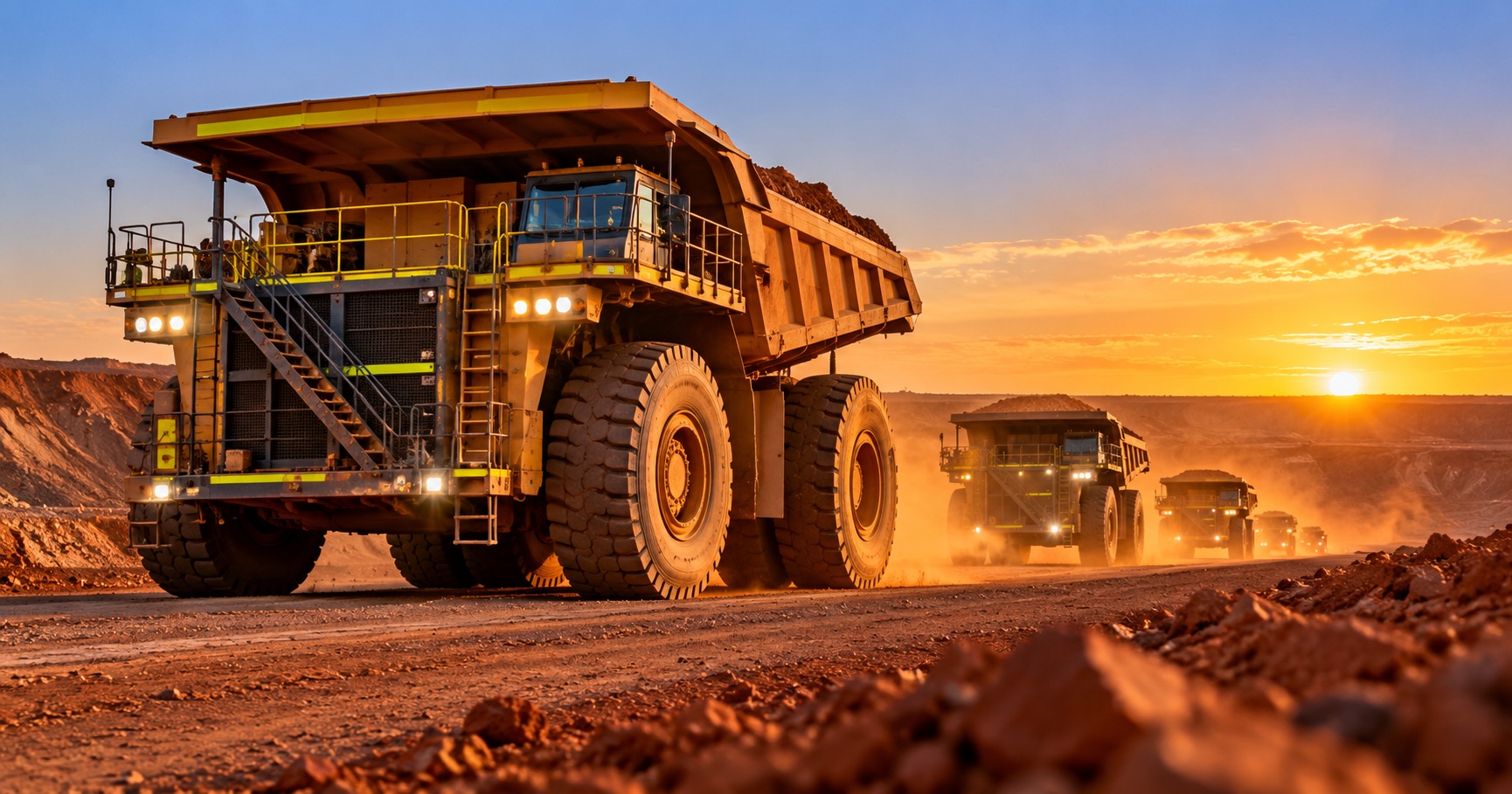
Pilbara EV haul trucks gain cost edge as diesel prices surge
Battery-electric mining trucks have become cheaper to operate than diesel haul trucks under current fuel prices, according to new modelling that could strengthen the economic case for mine-site electrification in Western Australia’s Pilbara.
Research by climate and energy advisory firm Cyan Ventures found battery-electric vehicles were 5 per cent cheaper to operate than diesel haul trucks in September 2026, after diesel prices increased to $1.91 a litre.
That represents a significant reversal from September 2025, when diesel cost about $1.14 a litre and diesel-powered mining vehicles were estimated to be 13 per cent cheaper to run than battery-electric alternatives.
The modelling attributes the change to rising oil prices after conflict involving Iran restricted oil flows through the Strait of Hormuz.
Higher diesel prices shift operating economics
Cyan Ventures co-founder and managing partner Shaun Chau said the latest fuel-price environment strengthened the case for mining companies to reconsider the timing of fleet electrification.
The report comes as some major miners have delayed transitioning their large diesel fleets until the 2030s, with high upfront costs and uncertainty about the near-term viability of battery-electric technology among the factors affecting investment decisions.
Cyan Ventures based its modelling on public disclosures from Australian and overseas mining operations, including coal mines in China and Mongolia, as well as confidential discussions with mining industry participants.
The findings have also attracted support from Fortescue Metals Group, which has advocated faster adoption of electric technology across the iron ore industry.
Fortescue chief executive Dino Otranto said the company believed the economics of battery-electric haulage were already favourable before the latest increase in diesel prices and had subsequently strengthened.
Industry disputes Pilbara comparison
The Chamber of Minerals and Energy of Western Australia has challenged the modelling, arguing it does not adequately reflect operating conditions at Pilbara iron ore mines.
Chief executive Aaron Morey said comparisons with overseas operations did not account for important factors including the longer distances travelled by Pilbara haul trucks and the region’s more extreme temperatures.
The disagreement highlights the importance of site-specific operating conditions when assessing the financial case for replacing diesel equipment with battery-electric alternatives.
WA Energy Minister Amber-Jade Sanderson backed the modelling, saying investment in decarbonisation could deliver both cost savings and improved fuel security over the medium and longer term.
Sanderson has also called for greater use of common-user transmission infrastructure in Western Australia’s north-west, arguing that shared electricity infrastructure could provide a more commercially efficient pathway for mine-site decarbonisation.
The new operating-cost comparison is particularly relevant to miners considering how renewable generation, battery storage and electrified equipment could work together across remote operations.
Cyan Ventures’ analysis does not remove the upfront capital requirements or operational questions associated with battery-electric fleets. However, its modelling suggests that higher diesel prices can materially alter the relative economics of electric haulage, potentially affecting the timing of future investment decisions.
For energy infrastructure developers and investors, the debate also underscores the connection between mine electrification and the availability of renewable generation, storage and transmission infrastructure needed to support increasingly electricity-intensive mining operations.
SOURCE ATTRIBUTION:
Based on reporting by The Australian Financial Review.