
Centuria solar deal links $430m rollout to property income
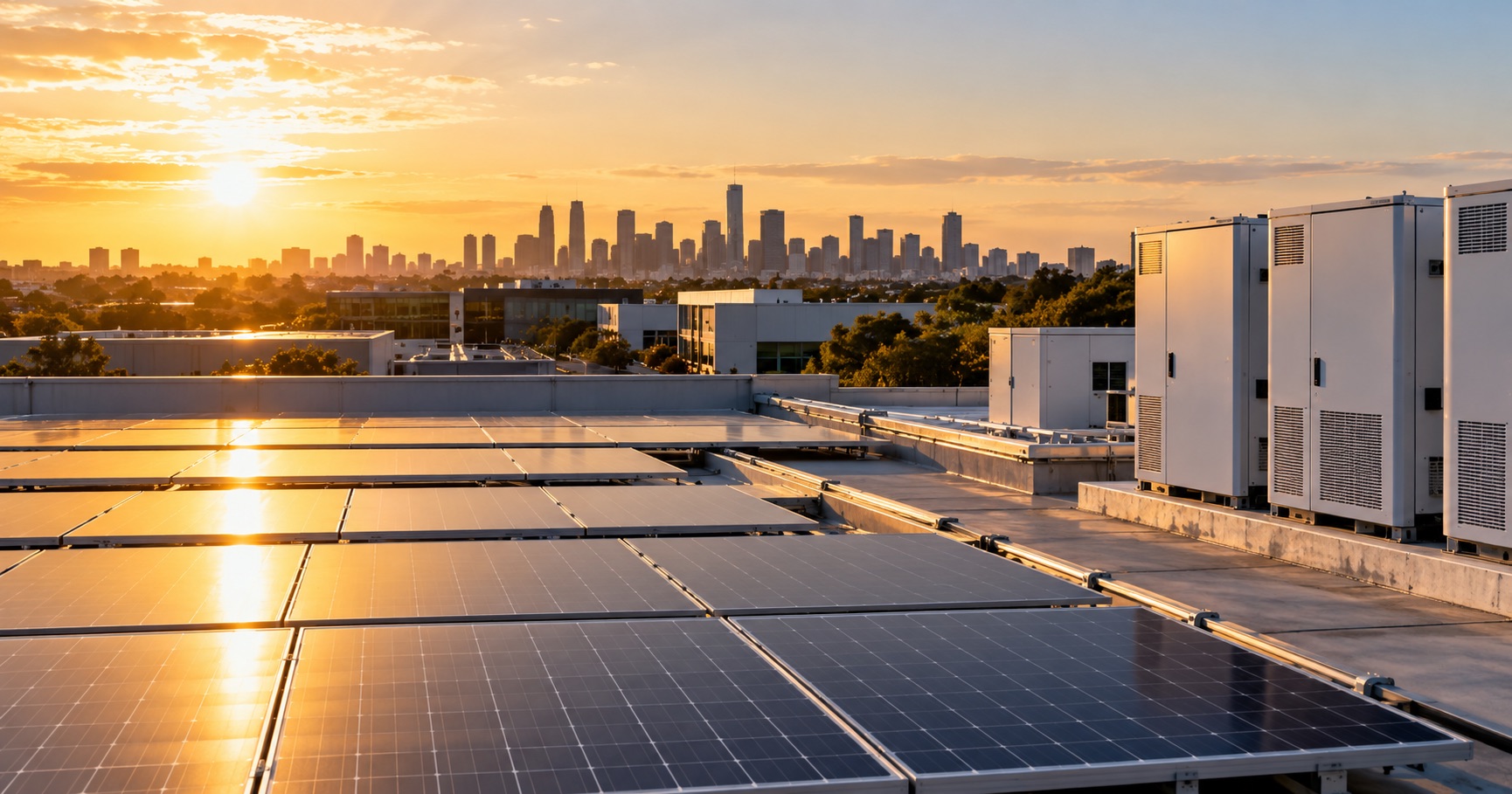
Centuria Capital Group has outlined a solar and battery agreement with Energy Bay that is expected to bring about A$430 million of energy infrastructure investment to up to 240 commercial properties, while creating rental income from rooftop space.
The Centuria solar deal covers around 70 megawatts of new solar capacity and 300 megawatt-hours of battery storage across office, industrial, retail and healthcare assets. Announced by Centuria on 1 October 2026, it provides for a seven-year rollout scheduled to start this month.
Energy Bay will fund the installation and infrastructure upgrades, rather than requiring capital contributions from Centuria or its tenants. That structure makes the agreement relevant to property owners assessing how to add renewable energy infrastructure without funding the equipment themselves.
Roof leases underpin the commercial model
Under the 30-year arrangement, Energy Bay will lease rooftop space and operate embedded electricity networks. Centuria expects additional income to increase participating properties’ net operating income and potentially support valuations. These are anticipated benefits, not confirmed valuation increases or guaranteed investment returns.
An embedded network is a private electricity network within a building or precinct through which energy is supplied to individual occupiers. It can combine electricity purchased from a retailer with generation on site.
The commercial model brings together access to property, energy infrastructure and customer demand. For a comparable project, the financing question is not simply what the panels cost: it is whether the contracts support dependable revenue throughout the asset’s operating life.
A staged rollout, not 240 completed projects
About 18% of the identified properties already have embedded network infrastructure. These sites are expected to transition into the program first, subject to conditions, with rental income anticipated during the first half of the 2026–27 financial year.
The remaining assets require tenant consent, planning approvals and detailed due diligence before rollout. The headline property count therefore describes the potential program, rather than a portfolio in which every installation is construction-ready.
For financing purposes, that distinction is material. Treating all sites as though they start earning income together could overstate early cash flow. A project assessment should instead test the consequences of staggered commissioning, approval delays and lower-than-expected tenant participation.
The announcements reviewed do not disclose site-level rental rates, financing terms or projected investor returns. Those gaps prevent a reliable calculation of project yield from the headline expenditure and capacity figures alone.
Tenant savings depend on the details
Centuria expects tenants who choose Energy Bay’s supply to benefit from lower-cost electricity. However, the public announcements do not establish a guaranteed percentage saving for each participating business.
The Australian Energy Regulator also notes that embedded-network customers can face practical difficulties switching retailers. Customers using an external retailer need to ensure they are not charged twice for network services.
For comparable developments, a useful commercial review would examine tariff escalation, metering charges, retailer access and responsibility for equipment replacement. A long contract term does not, by itself, establish that every tenant will achieve the same financial benefit.
Electricity certificates need separate treatment
The companies forecast around 85,000 megawatt-hours of renewable electricity generation annually. They expect associated large-scale generation certificates, or LGCs, to help meet Centuria’s targets for emissions from purchased electricity. These remain projections for the program, not measurements of completed installations.
LGCs are not interchangeable with Australian carbon credit units. The Clean Energy Regulator defines an LGC by reference to one megawatt-hour of eligible renewable electricity, while an ACCU represents one tonne of carbon dioxide equivalent abatement. A project model should distinguish electricity sales, certificate value and emissions claims.
There is also a timing issue for long-lived assets. The Renewable Energy Target ends in 2030, while the Renewable Electricity Guarantee of Origin scheme continues beyond that date. Eligible facilities cannot create both LGCs and REGO certificates for the same generation.
The implication for developers is to establish which party owns the certificates, who can make the associated environmental claims, and which scheme applies at each stage. The announced rollout does not demonstrate that every new installation will qualify for the same certificates throughout a 30-year operating arrangement.
What the deal means for other developers
The agreement provides a concrete example of a property owner and an energy infrastructure provider dividing funding, site access and operating responsibilities. Its ultimate commercial outcome will depend on delivery and contract performance, not only on the amount of equipment proposed.
For Australian businesses exploring solar project finance or renewable energy development partnerships, the practical lesson is to assess the funding structure alongside tenant participation, approval milestones and long-term operating obligations. Installation capacity is a useful starting point; it is not a substitute for a project-specific investment case.
Source attribution: Based on announcements by Centuria, published 1 October 2026, and Energy Bay, published 2 October 2026; cross-checked against Renewables Now and pv magazine Australia reporting. Regulatory context is drawn from the Clean Energy Regulator and Australian Energy Regulator.