
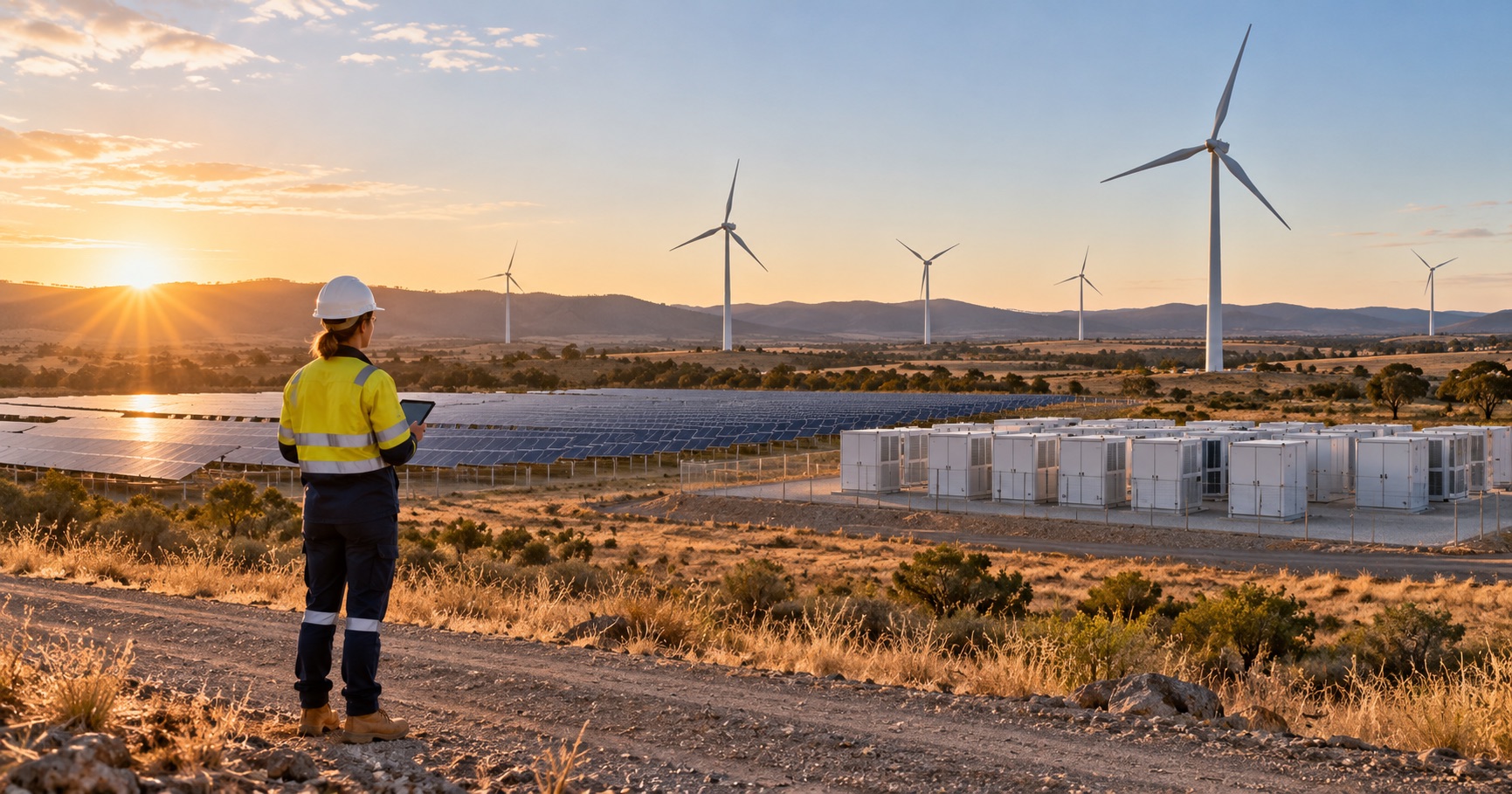
Economics reshape Australia’s renewable energy transition
Australia’s shift towards renewable power has progressed considerably further than many expectations from 15 years ago, according to former Reserve Bank deputy governor Guy Debelle, who argues that economics is increasingly driving the transformation of the electricity system.
Debelle, now a board member of the Clean Energy Finance Corporation, said the transition was advancing despite substantial challenges facing individual renewable energy projects. The Australian National University listed Debelle’s 17 September lecture under the title The energy transition is going better than you think, focusing on the progress, challenges and opportunities associated with the transition.
His assessment comes as Australia continues to work towards having renewables supply 82 per cent of electricity by 2030. The federal Capacity Investment Scheme is intended to accelerate investment in new wind, solar and dispatchable capacity such as battery storage.
Economics increasingly shapes the transition
Debelle said reductions in power-sector emissions, together with increased electrification, had moved much further than would have been reasonably expected 15 years ago.
He argued that the economics of renewable technologies increasingly support the transition independently of climate-policy considerations, while acknowledging that project-level difficulties remain.
Australia has already passed a significant electricity-generation milestone. Renewable sources supplied more than 50 per cent of electricity demand during the December quarter of 2025 for the first time, while batteries have become an increasingly important part of the changing grid.
The ANU description of Debelle’s address similarly highlighted rising renewable penetration and rapid growth in battery storage as important developments in the energy system.
Project delivery remains a challenge
The stronger long-term economics do not remove the need to bring enough new generation into operation before existing coal-fired capacity closes.
The source report points to a slowdown in new wind and solar investment as a continuing challenge for Energy Minister Chris Bowen and the government’s 2030 renewable electricity target. Separate recent reporting has also highlighted delays affecting the wind-development pipeline and concerns about how quickly proposed capacity is reaching financial close and construction.
The Capacity Investment Scheme remains a central part of the government’s response. In May 2026, the government announced 19 projects under one tender round representing 7.8GW of renewable generation and another 7.9GWh of battery storage through hybrid projects.
Australia is also working towards its separate 2035 emissions target, which calls for a reduction of 62 to 70 per cent below 2005 levels. That target was announced in September 2025 and forms part of Australia’s commitments under the Paris Agreement.
For renewable-energy developers and investors, Debelle’s assessment highlights the distinction between the broader economics of the transition and the practical task of financing, approving and constructing individual projects. The expansion of renewable generation and battery storage shows how far the electricity system has already shifted, while project delivery will remain important in determining how closely Australia tracks towards its 2030 target.
SOURCE ATTRIBUTION:
Based on reporting by The Australian Financial Review.