
Akaysha Secures A$1.75bn Battery Portfolio Financing
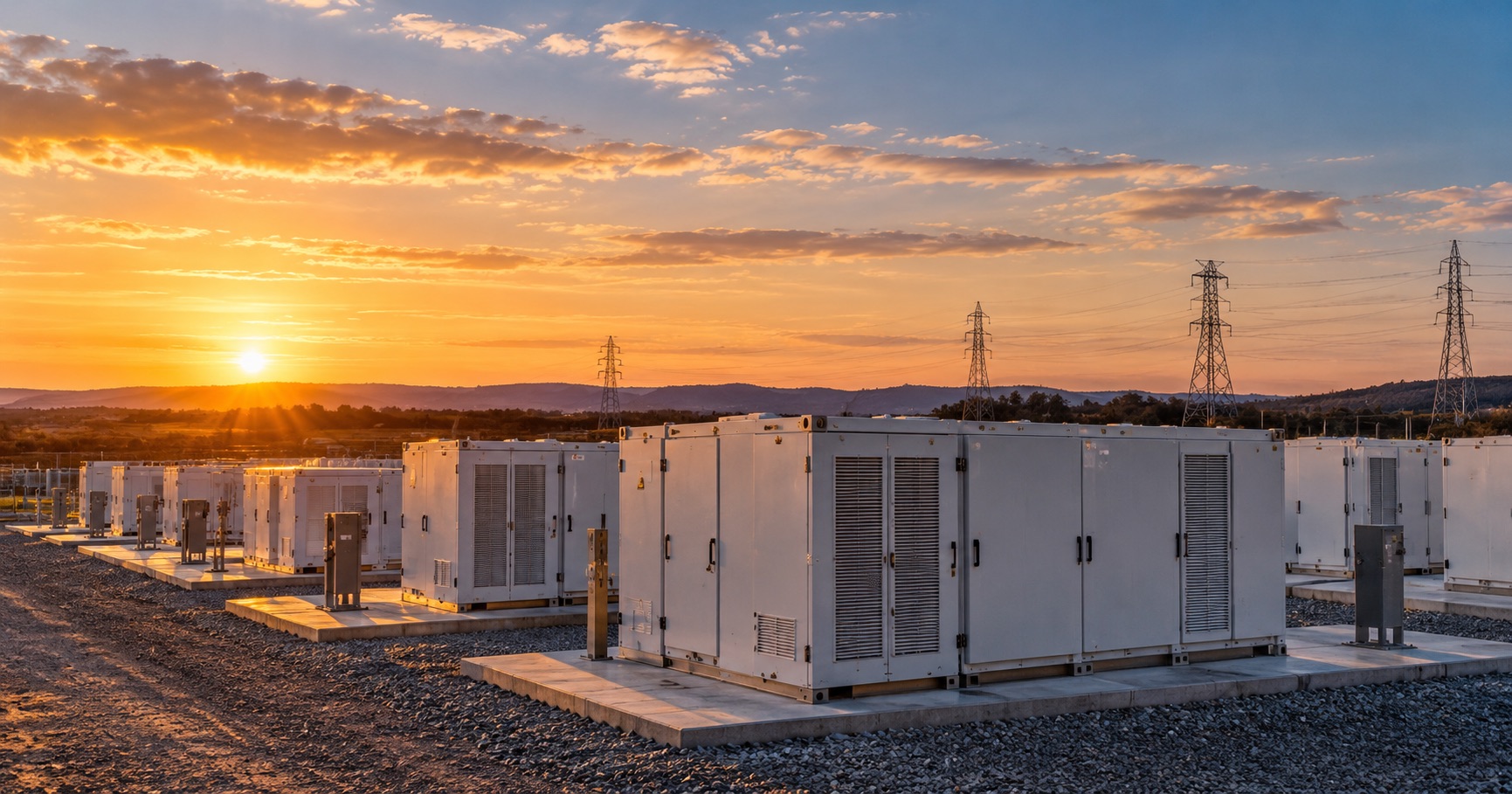
Akaysha Energy has consolidated debt across four Australian battery projects into an A$1.75 billion portfolio financing facility, creating a platform intended to support the company’s next phase of large-scale storage development.
Announced on 20 October 2026, the transaction brings the Brendale, Orana, Ulinda Park and Elaine battery energy storage systems under one financing structure. Brendale, Orana and Ulinda Park are operating, while the Elaine project in Victoria is under construction and targeted for completion in the second half of 2027.
The distinction between refinancing and new investment is important. The A$1.75 billion headline does not represent an equivalent amount of new construction expenditure. It replaces existing project-level debt, adds portfolio-level flexibility and may help Akaysha advance future projects, subject to the usual development, approval and investment decisions.
One financing platform across four battery assets
Akaysha said the financing comprises three facilities with five-, seven- and ten-year tenors. It also includes revolving liquidity and contingent-instrument facilities, which can support working-capital needs and financial obligations as the portfolio develops.
Eleven banks backed the transaction, including ANZ and Commonwealth Bank of Australia, alongside BNP Paribas, Bank of China, CIBC, Deutsche Bank, DNB, ING, Mizuho, MUFG and Rabobank.
The four refinanced assets span different locations and stages. Ulinda Park and Brendale are in Queensland, Orana is in New South Wales, and Elaine is being built in Victoria. Together, the structure combines operating projects with a construction-stage asset rather than relying on a single battery’s risk and cash-flow profile.
Akaysha describes its Australian development pipeline as approximately 6 GW and 25 GWh across the National Electricity Market. Those figures represent projects being pursued; they should not be interpreted as capacity fully financed or committed for construction through this transaction.
Why portfolio financing matters
Large energy projects are often financed separately, with lenders assessing the contracts, construction risks, operating assumptions and expected cash flows of each asset. A portfolio facility can create a different proposition by grouping several projects under a common debt framework.
For a developer with operating assets, this approach may simplify debt management, diversify exposure across projects and provide liquidity for the next development phase. It may also allow financing terms and maturities to be matched more deliberately to assets at different stages.
However, the public announcement does not disclose interest margins, debt allocation, security arrangements, financial covenants or the amount of fresh capital available after existing facilities are repaid. Without those details, it is not possible to calculate the financing’s effect on Akaysha’s cost of capital or conclude that its entire development pipeline is funded.
The transaction therefore matters less as a single headline number than as evidence that lenders are willing to assess utility-scale batteries as a portfolio of infrastructure assets. That is a sign of growing financial sophistication in Australia’s storage market, but not a guarantee that every proposed battery will achieve the same result.
Bankability still begins at project level
Portfolio finance does not remove the fundamentals of project bankability. Lenders and investors still need confidence in grid connection, planning and environmental approvals, equipment supply, construction delivery, operating performance, battery-degradation assumptions and the project’s revenue model.
For battery projects, revenue can come from several sources, including contracted capacity, tolling or offtake arrangements, energy-market trading and grid-support services. The strength, duration and interaction of those revenues can materially affect debt capacity and risk allocation.
Operating history also matters. Akaysha announced the financing after several of its batteries entered operation and the Waratah Super Battery reached final commercial operations. Waratah provides broader delivery context, but it is not one of the four assets identified as being refinanced under the A$1.75 billion facility.
What the deal means for Australian developers and investors
The financing arrives as renewable investment reaches new records in Australia. Clean Energy Regulator data released in October showed 5 GW of large-scale renewable capacity had reached final investment decision during 2026, already exceeding the previous full-year record. Solar accounted for 3.5 GW of that total.
For developers, the practical lesson is that financing strategy should be considered alongside project design, approvals, connection, construction and revenue contracting from the beginning. Standardised development processes and a credible delivery record can help individual projects become part of a financeable operating platform.
For investors, portfolio structures can offer scale and diversification, but they require careful analysis of each asset and the obligations shared across the portfolio. A large facility does not eliminate construction, market, technology or counterparty risk.
Akaysha’s transaction shows how Australia’s battery sector is moving beyond one-project-at-a-time funding towards larger capital platforms. The next test will be how effectively that financing flexibility converts proposed projects into operating assets with durable, risk-adjusted returns.
Source attribution: Based on Akaysha Energy’s announcement published 20 October 2026; cross-checked against reporting by pv magazine Australia and Energy-Storage.news. Australian market context is drawn from the Clean Energy Regulator and the Australian Government.